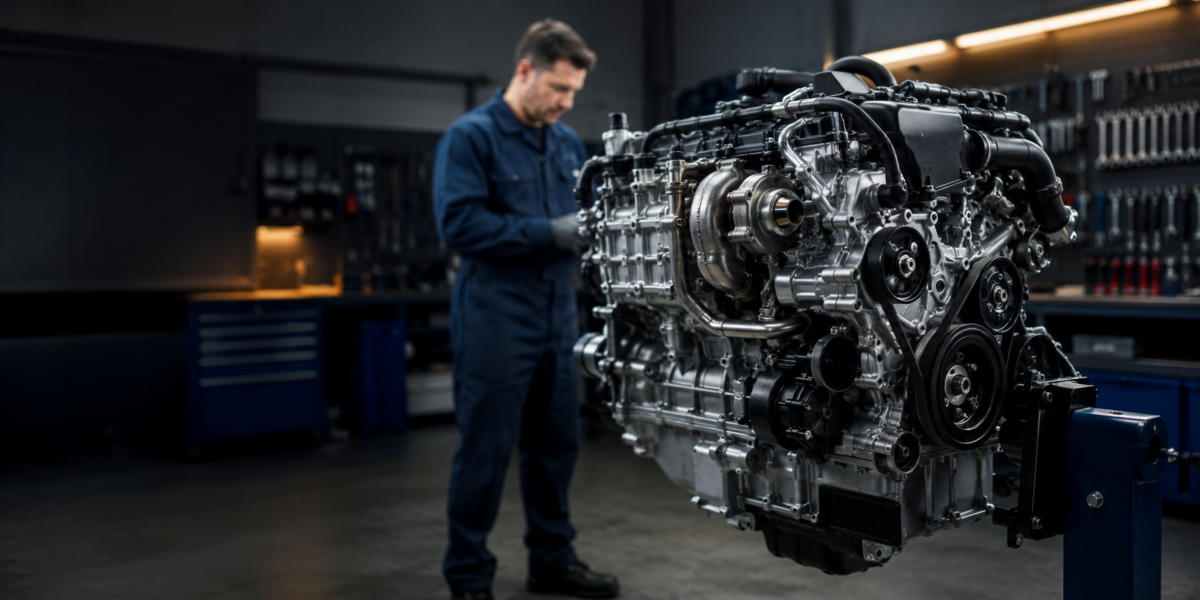
Engine Rebuilds, Repairs and Reconditioned Engine Parts
Practical, professional support for cars, vans and 4x4s with engine
trouble—beginning with a proper diagnosis and ending with a repair
you can understand.
A Clearer Way to Deal with Engine Problems
A serious engine fault can leave you facing a difficult choice.
Should you repair the original unit, commission a complete engine
rebuild or fit a replacement reconditioned engine? The right answer
depends on the fault, the condition of the vehicle, parts availability
and the amount you are prepared to invest. At [Company Name], we help
customers make that decision using evidence from a proper inspection,
not guesswork or pressure.
We provide engine repair, rebuilding and reconditioning solutions for
private motorists, tradespeople, fleet operators and garages. Our work
covers petrol and diesel cars, commercial vans and selected 4×4
vehicles. Whether the symptoms involve knocking, smoke, overheating,
low oil pressure, poor compression or complete non-starting, the first
task is to identify what failed and why.
That last point matters. Replacing damaged parts without dealing with
the original cause can result in another failure. A blocked oil pickup,
defective injector, cooling-system problem, turbocharger fault or
timing-system issue may have contributed to the damage. A responsible
repair considers the engine as a complete system rather than treating
the most visible symptom in isolation.
Our Engine Services
Engine Repairs
Not every fault calls for a complete rebuild. Where practical,
we can repair specific mechanical problems such as cylinder-head
damage, gasket failure, oil leaks, timing-system faults and
lubrication problems. Inspection results determine whether a
targeted repair is technically sensible and likely to offer
worthwhile service life.
Complete Engine Rebuilds
A rebuild normally involves removing and dismantling the engine,
cleaning its components and measuring critical tolerances.
Damaged or worn parts are repaired or replaced before the unit
is carefully reassembled. The precise scope depends on the
engine design and its condition after strip-down.
Reconditioned Engines
A reconditioned replacement can reduce vehicle downtime when
an appropriate unit is available. Compatibility must be checked
using the registration, VIN and engine code. We will also explain
whether the price is for a bare engine, complete unit, exchange
engine, supply-only package or fitted service.
Reconditioned Engine Parts
Depending on stock and suitability, we can assist with
reconditioned cylinder heads, crankshafts, connecting rods,
blocks and related components. Every enquiry should include the
exact engine code because similar-looking components are not
always interchangeable.
When Might an Engine Need Rebuilding?
Engines rarely fail without warning, although the early signs are easy
to overlook. A warning light, unfamiliar noise or small change in oil
consumption may be the first indication of a developing mechanical
problem. Continuing to drive can turn a manageable repair into major
internal damage, so arrange an inspection promptly if the vehicle begins
behaving differently.
Common warning signs include:
- Heavy knocking, tapping, rattling or grinding from the engine
- Blue, white or persistent black exhaust smoke
- Low oil pressure or an oil warning light that remains illuminated
- Frequent overheating or unexplained coolant loss
- Oil and coolant mixing or contamination beneath the filler cap
- Poor compression, difficult starting or repeated misfires
- A sudden loss of power accompanied by unusual mechanical noise
- Excessive oil consumption or visible metallic debris in the oil
- Timing-belt, wet-belt or timing-chain failure
- A seized engine or crankshaft that will no longer turn
engine overheats severely or a loud knocking noise develops, switch the
engine off as soon as it is safe. Driving further may cause additional
damage and increase the eventual repair cost.
What Happens During an Engine Rebuild?
“Engine rebuild” is sometimes used as a loose marketing expression.
Customers deserve to know what the quoted work actually includes. The
process varies between engines, but a thorough rebuild generally follows
the stages below.
-
Initial assessment: We record the symptoms and
relevant history, including warning lights, previous repairs,
overheating incidents and oil or coolant loss. Diagnostic scans,
compression testing or oil-pressure checks may be used where
appropriate. -
Removal and strip-down: If internal damage is
suspected, the engine is removed and dismantled methodically.
Components are kept organised so the failure pattern can be
examined rather than hidden. -
Cleaning and measurement: Parts are cleaned before
bores, crankshaft journals, bearing surfaces and cylinder-head
components are inspected. Measurements are compared with the
relevant tolerances. -
Machining and component selection: Depending on
condition, work might include cylinder-head pressure testing and
resurfacing, crankshaft polishing or grinding, bore treatment and
replacement of pistons, rings, bearings, seals and gaskets. -
Reassembly: The engine is assembled using suitable
components, correct tightening procedures and the lubricants and
sealants required for that engine. -
Refitting and checks: When a fitted service has
been selected, the engine is installed and supporting systems are
examined. Fluids are renewed as agreed, fault codes are checked and
the engine is monitored for leaks, pressure and operating
temperature.
The final quotation should state the agreed scope, exclusions and
warranty conditions. Items such as injectors, turbochargers, cooling
components, clutches, dual-mass flywheels, diesel particulate filters
and ancillary equipment may require separate testing or replacement.
Clear documentation helps prevent misunderstandings once work begins.
Repair, Rebuild or Replacement?
A localised repair may be the best choice when damage is limited and the
remaining engine is in sound condition. A full rebuild becomes more
appropriate when wear or contamination affects several internal
components. A replacement reconditioned engine may offer a shorter,
more predictable route when the original block or cylinder head cannot
be recovered economically.
Cost alone should not decide the matter. Consider the vehicle’s overall
condition, mileage, maintenance history, market value and intended use.
A working van that earns money every day has different priorities from
a second household car. Likewise, a well-maintained vehicle with a known
history may be worth retaining even when the engine needs substantial
work.
Be cautious when comparing quotations. The lowest advertised figure may
cover only a bare supply unit and exclude removal, fitting, fluids,
diagnostics, delivery, recovery or refundable exchange surcharges.
Ask each supplier to confirm exactly what is included and whether the
price could change after inspection.
Cars, Vans and 4×4 Engine Solutions
We support a broad range of vehicles, subject to engine-code
identification and parts availability. Commercial customers often need
a practical balance between repair quality, cost and downtime. We
therefore ask about the vehicle’s workload, annual mileage and previous
service history before suggesting a solution.
Ford commercial vehicles can require specialist knowledge, particularly
when diagnosing lubrication, timing or wet-belt-related faults. Owners
researching model-specific options may find this
Ford Transit reconditioned engine resource
useful. More information about van-focused diagnosis and rebuilding is
also available from the
Van Engine Centre.
Range Rover and Land Rover engines bring their own technical and
compatibility considerations. Vehicle generation, engine code and
drivetrain specification must be checked before a replacement is
selected. This
Range Rover and Land Rover engine guide
provides further model-focused information.
Why Diagnosis Comes Before a Quotation
Two vehicles can display the same symptom for very different reasons.
White smoke might relate to coolant entering a cylinder, but it can also
have other causes. Low oil pressure could result from bearing wear, a
blocked pickup, unsuitable oil, a failing pump or an electrical issue
with the pressure-sensing circuit. Quoting a complete rebuild without
investigating the fault risks unnecessary work.
We begin by gathering useful details: registration, mileage, engine code,
symptoms, fault codes and the circumstances in which the problem began.
Photographs, workshop reports and short videos can sometimes help with
an initial assessment, although they do not replace physical inspection.
If dismantling is required to establish the full extent of the damage,
we will explain that before work proceeds.
Customers should also mention recent component replacements. A new
turbocharger, injector set or timing kit can change both the diagnosis
and the most economical repair plan. Complete information helps us avoid
repeating tests and allows the quotation to reflect the vehicle more
accurately.
Choosing Reconditioned Engine Parts
Reconditioned components can provide a sensible alternative to buying
new parts, but terminology varies between sellers. “Used”, “rebuilt”,
“remanufactured” and “reconditioned” should not automatically be treated
as equivalent. Ask what work has been completed, which components were
replaced, what checks were performed and what warranty documentation
accompanies the part.
Compatibility is equally important. Do not order from the vehicle model
name alone. Manufacturers may install several engine variants within the
same model year, and differences in sensors, sumps, cylinder heads,
emissions equipment or fuel systems can prevent a straightforward fit.
Supply the full engine code and VIN whenever possible.
If an exchange unit is involved, ask whether the original component must
be returned, when it must be returned and what condition is acceptable.
Some suppliers apply a surcharge until a serviceable old unit is
received. Knowing these terms in advance makes budgeting much easier.
Useful UK Engine Rebuilding Resources
Good decisions begin with informed questions. The following independent
websites offer further information about engine repairs, rebuilding,
replacement units and specialist vehicle applications. External content
is provided for general research; always confirm current prices,
technical specifications and warranty terms directly with the relevant
provider.
-
Engine Repair UK
— information about engine faults, repair and rebuilding services. -
Engine Rebuilding UK
— general engine-rebuilding information and service options. -
National Engines
— UK engine replacement and reconditioning information. -
Blue Engines
— further information about replacement and reconditioned engines. -
Reconditioned Engine UK
— guidance for customers considering a reconditioned unit. -
Rebuilt Engines UK
— information about rebuilt engine choices. -
Engine Rebuilders UK
— a further resource covering professional engine rebuilding.
Frequently Asked Questions
How much does an engine rebuild cost?
The price depends on the engine, extent of damage, machining
required, parts availability and whether removal and refitting are
included. We need the registration or engine code and a description
of the fault before offering meaningful guidance. A final price may
require inspection or strip-down.
Is a rebuilt engine the same as a new engine?
No. A rebuilt engine uses an existing engine as its foundation.
It is dismantled, assessed and rebuilt using repaired or replacement
components as required. The exact work should be documented because
the meaning of “rebuilt” can vary between suppliers.
Can you identify my engine from the registration?
A registration is a useful starting point, but the VIN and engine
code may also be necessary. This is especially important where a
manufacturer used several closely related engines in the same
vehicle range.
Will all external engine components be replaced?
Not automatically. Injectors, turbochargers, alternators, starter
motors, air-conditioning compressors and emissions components may
be tested or quoted separately. Your written quotation should
explain what is included.
How long will the work take?
Timescales depend on workshop capacity, parts supply, machining and
what is discovered after dismantling. We provide an estimated
schedule when the scope is known and will explain any material
change.
Request an Engine Repair or Rebuild Quote
Tell us what happened, when the symptoms started and whether another
garage has already inspected the vehicle. Please include the registration,
mileage, engine code if known, your postcode and the best telephone
number for reaching you. The more accurate the information, the more
useful our initial response can be.
Call [Telephone Number] or email
[Email Address]. We will discuss
the available repair, rebuild or replacement options and explain the
next diagnostic step without unnecessary jargon.